
The food waste impacts on environment: a planet in danger

If food waste were a country, its greenhouse gas emissions would be the third largest in the world, following the United-States and China. This sets the scene of the current urgency for our planet.
In our white paper, which we built as the new “Food waste bible” for retailers, we dug into the environmental impacts of food waste.
Let’s focus on it in this article.
Food waste, also impacting the resources used for production
Before food finds its place into shelves and then at the buyers homes, it follows a real production process. The typical stages consist of the food being grown, processed, sorted, packaged, transported, marketed and then eventually sold. Food waste can be identified as occurring at all these stages.
And when we throw away food, we also throw away the precious resources that went into producing it. This includes the use of land, the natural resources (the three main ones being energy, fuel and water) and the labor, bringing the social cost up even higher to the environment and our biodiversity. For instance, lost or wasted food accounts for 38% of the total energy used in the global food system.
Water is highly impacted by food waste:
Agriculture, with irrigation, spraying required for crops and water needed for rearing, accounts for 70% of the water used throughout the world7. By wasting food, we are wasting freshwater. Given that countries have a severe water shortage, conserving freshwater is a global top matter. The Natural Resources Defense Council (NRDC) established that food waste ends up wasting a quarter of our water supply in the form of uneaten food. The equivalent of 172 billion of $ in wasted water.
Throwing away a kilogram of beef? It is like throwing away 15 000 liters of water!
Land is also highly degraded by the production of food:
Wasting food has an impact on the physical land itself. Two types of land are wasted for uneaten food: the one used to produce the food and the other one used for dumping the food.
Agriculture uses 11,5 million hectares of the global land surface.
There are two types of land: arable (that can grow crops) and non-arable.
900 million hectares of non-arable land is used for livestock to produce meat and dairy products. As meat is in higher demand, more arable landscapes are being converted into pastures for animals to graze, prohibiting anything natural from growing on it. We are over-stressing land for food production that we waste later in the chain of consumption. If we continuously degrade the land, it is clear that the ability to yield will diminish overtime.
Biodiversity is harmed:
The food we eat is contributing to the destruction of biodiversity. Fauna and flora are damaged and threatened by the production process, which may end up in the landfills.
At stake?
Agriculture and conversion of natural lands:
The lands used for production lead to the destruction of natural habitats, mostly through massive deforestation (like the Amazon). It not only reduces biodiversity but also increases greenhouse gas emissions by removing carbon sinks and replacing them with carbon sources.
Intensive fishing and marine pollution:
The global fish consumption is reportedly rising, yet at the same time places like Europe are discarding up to 60% of fish because they do not meet supermarkets quality standards. A natural disaster, emphasized by the threat that if global warming increases by 2%, the coral reef will be devastated. Food waste can also contain pesticides which harm aquatic life.
Chemicals impacts:
Food waste, which may contain harmful chemicals, can reduce the number of pollinators by destroying their habitats and reducing the availability of food sources.
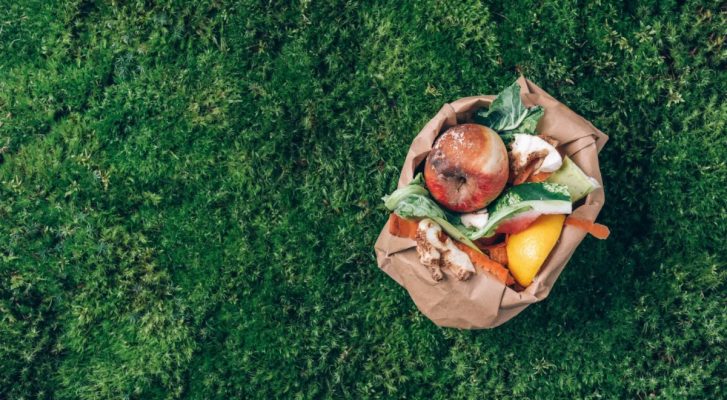
Food waste, impacting climate change
When food is thrown away in landfills, it subsequently releases methane. Once it is done, it lingers for 12 years and traps heat from the sun.
Did you know that methane is 25x stronger than carbon dioxide?
It contributes towards 8 to 10% of the global greenhouse gas emissions released. earth.org already pointed out two years ago that if food waste were a country, its greenhouse gas emissions would be the third largest in the world, following the United-States and China.
Solving food waste is a top priority to start decarbonizing.
Illustrations of the environmental impacts of food waste
Concrete comparisons are easier for you to understand the impacts of food waste on our environment? Here they are!
- If every person in the UK wasted no food at home for one day, it could have the same impact on greenhouse gas as planting half a million trees.
- According to the World Wildlife Federation, the production of wasted food in the United-States is equivalent to the greenhouse emissions of 37 million cars.
To sum-up, food going to waste ends up using up to:
- 9 to 10% of the global greenhouse gas emissions
- 24% of freshwater
- 23% of cropland
- 25% of landfill volume
And that’s not all as oil, diesel and other fossil fuels are consumed as well for food transportation.
Would you like to find out more about the impact of food waste on our environment?
Contact one of our experts!